Over the past few months, I’ve tested several AI sales tools. Some show promise. Others are all hype. Currently th most talked-about category in the field is “AI SDRs” — AI Sales Development Representatives. These tools claim to automate the entire outbound sales process, thus replacing the human SDRs.
B2B sales is complex and slow. For example, in healthcare, deals take several months or even years. The sales journey typically follows these steps: lead prospecting, qualification, engagement, and conversion.
Prospecting is the most straightforward step. You find names, titles, company data, and contacts of the relevant prospects. Then you assess who might be the decision-maker and best way to reaching out.
Qualification is harder. You try to figure out if these people would be interested in your offer. You look at what they search for, what they engage with, and what they buy. Also, where the company stands – would your solution be relevant for them, etc.
The engagement and conversion are where the actual selling occurs. This is where trust, timing, and messaging matter. The best SDRs listen, not just pitch.
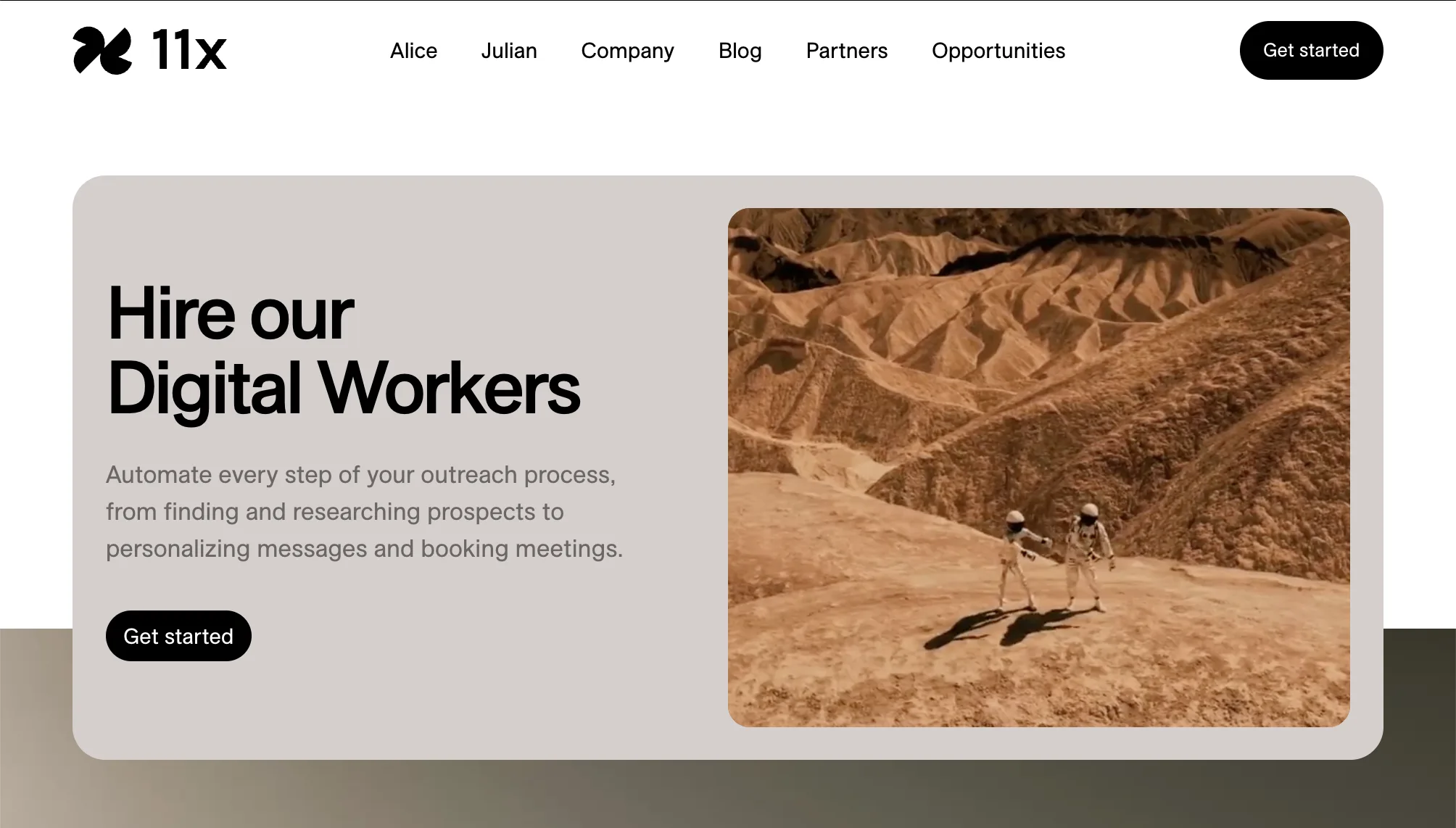
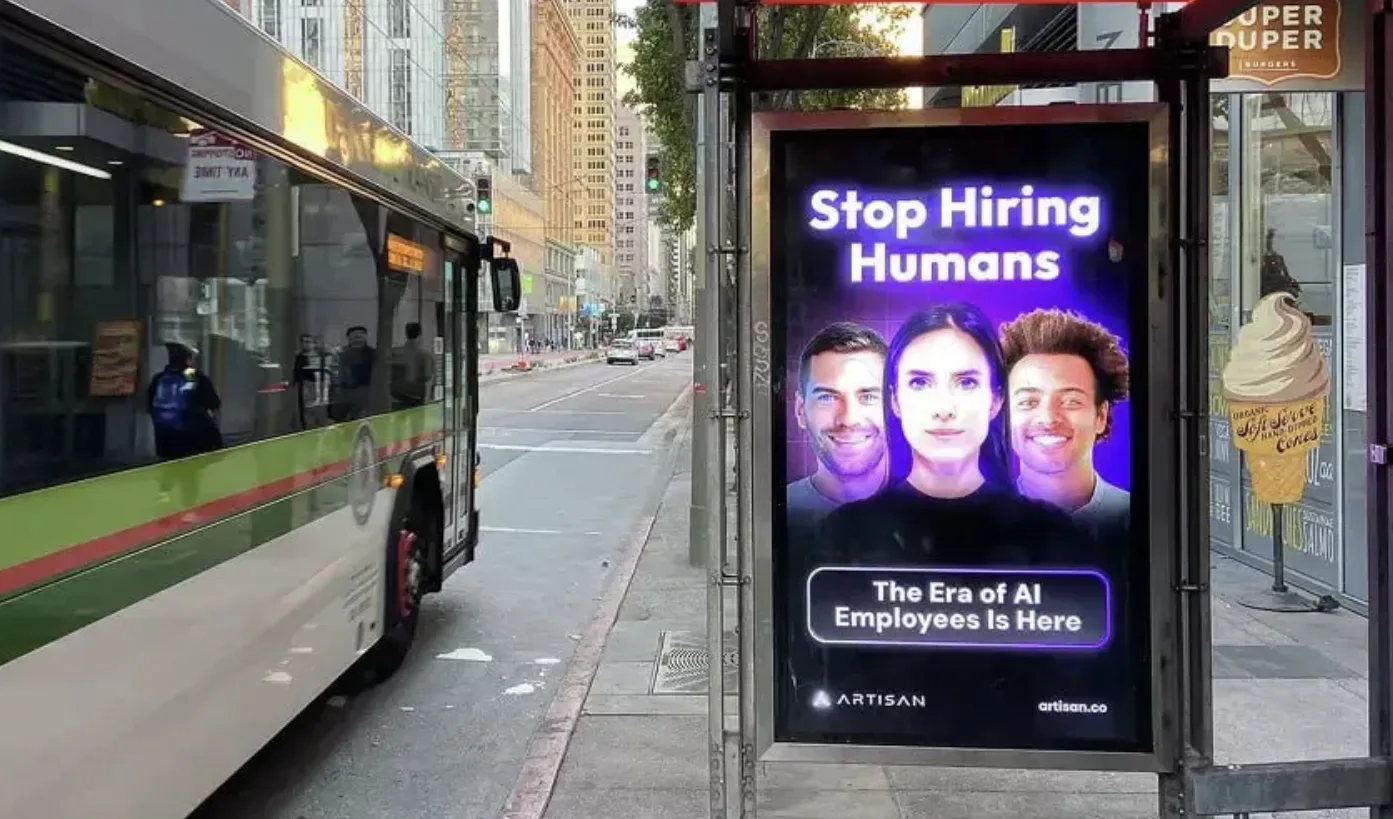
AI SDRs claim they can handle all of this, end-to-end. Faster, cheaper, and better than humans. Startups like 11x, AiSDR, and Artisan have raised big funding rounds selling this story. Their marketing is loud too. 11x’s landing page shows astronauts dancing on a red planet. Artisan put up billboards all over San Francisco and London telling companies to “Stop Hiring Humans”, grabbing attention and pissing some people off at the same time.
I tested some of these tools. I had it find prospects, gather company data, refine my offer, write emails, and handle outreach. The result: zero meaningful responses. In fact, if I had invested as much time as I did setting up these tools, I’d have at least 1 meaningful prospect.
I’ve done B2B sales for some time and have seen the space evolve. In my opinion, the core issue with AI SDRs is how they handle “sales”: essentially they rely on outdated cold outreach tactics. They go for volume over quality: spray and pray. A few years ago, mass outbound campaigns were harder to pull off. You needed technical skills to set up large emailing infrastructure, research prospects, avoid spam filters, and personalize messages at scale. Now, anyone can do it with cheap tools. As a result, inboxes are flooded, and email service providers (Google and Microsoft) have cracked down hard.
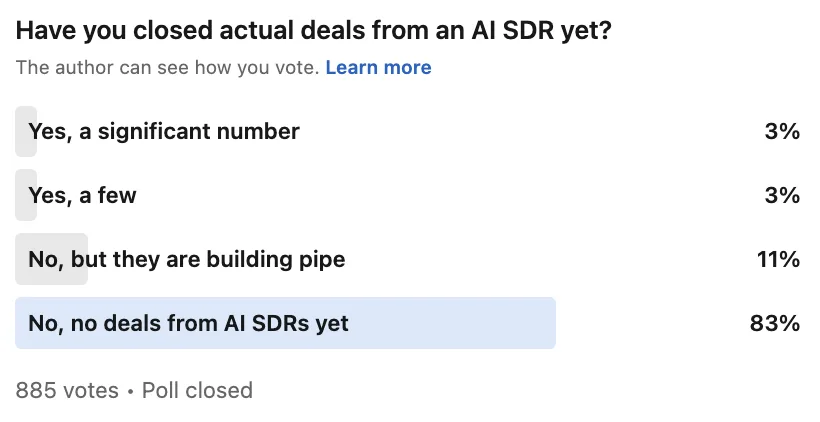
Spray and pray is dead. This is why AI SDRs have not delivered so far – not for me and not for others. A public poll from SaaStr showed that only 6% of customers generated revenue from AI SDRs, while 83% got absolutely nothing. Monthly costs for AI SDRs range from $500 to a few thousand dollars. As a result, most customers churn after the first few months.
With results like these, it’s no surprise that VCs are still hesitant to invest. They worry – rightfully so – that the growth isn’t sustainable. Desperate, some AI SDR startups have turned to questionable tactics to keep the momentum going. For example, 11x was recently accused of inflating its revenue to justify its $76M in funding, which led to the CEO stepping down…
Where AI can truly deliver value
AI doesn’t need to replace your entire outbound sales process. Its real value lies in making each part of the workflow faster and smarter, helping your “humans” sell more effectively. It can help you instantly spot buying signals, prioritize leads, and time your outreach so you focus on the right prospects and ignore the rest.
This means an average sales rep still relies on multiple sales tools for each step of the process. But that is nothing new. Fortunately, several startups now offer effective cross-platform integration and automation. My current favorite is the “waterfall enrichment” method. It lets you pull data from various platforms to enrich each prospect and spot real buying signals.
I built such an automation using Clay. It scanned RSS feeds from startup news sites like TechCrunch and EU Startups, flagging companies that had just raised funding or launched a new product. It also pulled founder contact details and identified key buying signals. When a lead looked relevant, it generated a personalized landing page with my offer. As a result, the responses I got were more frequent and meaningful than the usual AI SDR emails that only use {first name} and {company name} as variables.
And I believe that’s the real strength of AI in sales: cutting down manual research, surfacing the best leads, and sending the right message at the right moment. AI won’t replace your best sales reps. But it can make them 10x more focused, faster, and more effective. And that’s what actually moves the needle.